Sabbaticals should be compulsory
Eight months sabbatical passed like eight weeks. But it was worth it.Here is my longest entry ever but as I quit regular posting on social media - I decided to answer some questions I am often asked here. With pictures, of course. Sorry for the chaotic writing!
Thank you, ANU!
I came back from Australia a month ago. Still a bit busy with "returning to the everyday life" but ready to write a few words as many of my colleagues ask me how it was. In one word - it was very illuminating.
As most of my topics are knowledge acquisition / machine ethics-related, I am in a way obliged to be trans/multi-disciplinary, but it's not easy if you are under the same roof with computer scientists and the closest ethicists is on the other side of our huge campus. Getting accepted by ANU's Centre of Excellence for Dynamics of Language allowed me to land in a place where people from most of the fields of my interest were located within a boomerang throw range. Ironically Computer Science department was the farthest one ;)
Knowing people like David Chalmers, Marcus Hutter or Anna Wierzbicka helped me find my way to their groups and basically I was working with philosophers, computer scientists and linguists at the same time. The pace and the intensity (number of meetings, seminars, workshops, invited talks, etc.) were at first worrying but soon I found out that this kind of stimulation is what I needed. Some of the meetings I had to give up to get my work done, but I have learned many things from all the groups, not only about their research but also how the research, teaching or learning is done. Mini-hackathons, Pomodoro technique-style "shut up and write" sessions, donut & coffee meetings, lunches chats, Frinks (Friday drinks) discussions, etc. - almost every day. I thought Japan was group-oriented, but I have never seen this level of cooperation. Mailing lists, Slack or Trello apps help sharing but if you need to think alone, you just go outside.
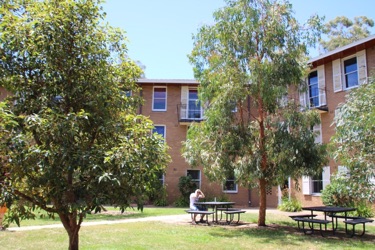
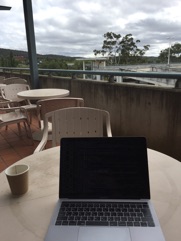
Of course if the temperature is pleasant. Canberra isn't the warmest place in Australia, it's not the most touristically attractive one, either. The closest beach is two hours away, Sydney is three hours away, Melbourne eight. Canberra doesn't distract you, just perfect place for research :) Prices were much higher than I expected but a bicycle and a rental car from time to time were enough. My wife loved Australia (she didn't feel as different as she feels in Japan) but my son wanted to go back to Japan. He missed his friends and his English (learned in Japan) wasn't enough.
His favorite beef dish()looked like this (after asking for a new one without mayo which can be wasabi taste!).


A longer stay somewhere away from your home makes you think, it's unavoidable. You realize what can be done differently and what you are missing because you don't notice (or don't want to notice). As probably some of you know already, Japan is always "playing safe". For example, because there were some fatal accidents with drinking alcohol among students, the alcohol consumption got prohibited "just in case". Yes, you hear me right, there are no bars on our campus. So if you want to discuss something with your colleague researcher and drink a beer, you have to go outside and don't count on meeting other researchers there. If your team wants to hang up with other group, there is lots of organizing and usually the food is involved. There is no "5-6PM one drink after work" custom, because it's physically impossible. There is virtually no communication among different departments and information flow is close to none. Similar situation is with usual meetings - mailing lists and seminars schedules are not widely shared among departments, there are not many opportunities to "just join" and to broaden your horizons / network with other groups.
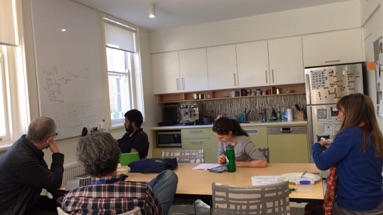
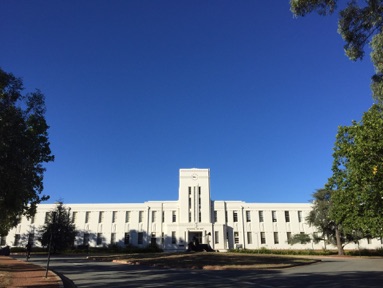
There was a point in my career I was thinking about doing a second PhD in ethics. After months with professional philosophers I am now aware how difficult it is to move around a world where a tiny linguistic nuance can matter so much. I am now sure that if I decide to get another degree, it will be done in Polish :)
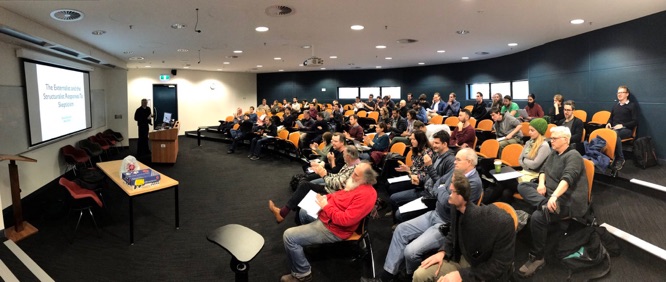
Prof. Chalmer's talk at ANU. No, I am not sleeping!
Spending some time with ANU students and fresh graduates brought some surprises. They are passionate students who just want(ed) to work on a topic they were fascinated with. Coming from a European university it was quite shocking for me that in Japan most of the students coming to a lab were actually never interested in the lab's topic (they have a right to choose a lab if they have the highest grades but then a "cool lab" image can become a factor more important that the research itself when you introduce your work to potential students). The same trend is visible in choosing a job; for the majority of Japanese students a company name and its prestige seems to be the priority, it doesn't really matter that they don't know what job they are going to do exactly. Arranged marriages can be successful but what is the success / stress rate?
Anyway, ANU students were very open with visiting staff. Painfully open. "We don't need lectures anymore", one computer science student said. "For many years Khan Academy, Udemy, Coursera, they have been our teachers, the university lecturers don't update and don't know how to teach". Everybody knows the world-wide (I guess) problem of us not being properly educated when it comes to teaching, but I didn't realize the students started giving up on us. I don't teach much*, but I started educating myself how to teach and took some online courses to see why students of the best Australian university prefer them over their teachers. But maybe I'm wasting my time? If we could outsource teaching to talented professionals who always update they lectures, we could earn more time for our research?
*Phd candidates and assistant professors basically don't teach in Japan, so if you want to get an associate professor in other country, your CV doesn't look good there, be careful!
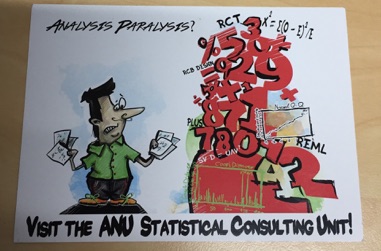
Speaking of talented professionals ready to help you, just look at this pic above. I wish we had such a unit at our university!
Another difference I have noticed is an attitude to sabbaticals. Last time I went to Stanford for a longer project (almost two months in 2011), one of the professors criticized me a bit because one or two months are not enough to "reboot the system", to learn something new or write a book. I remember him saying sabbaticals should be compulsory and professors must be sent somewhere away from their everyday routines to rewire the neurons. He told me that there were people who wanted to go but never did and criticized those who went. I think in Japan is a bit like in the US, not like in Europe or Australia. We need to move and get others moving to increase trust in Japanese researchers.Galapagosizationis not good in science, we need to stay active, original and doubting. I realize how trivial this sounds but without hungry hearts and global minds we won't receive much respect from the students. Fewer of them will enter PhD courses, fewer of them will follow in our footsteps.
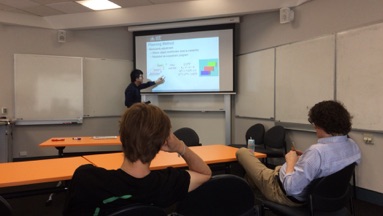
Spatial Common Sense group (Prof. Jochen Renz on the right)

Desks with changeable height was something I would like to have at my university. But my university doesn't change furniture to make its staff healthier. You must buy it by yourself :)
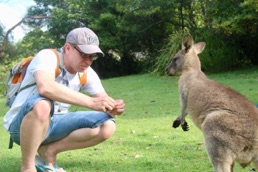
I lived in a district where kangaroos were coming to schoolyards and gardens. Canberra is a small capital city (population is 360.000) and it's very calm, green and full of animals. There were more rabbits outside my ANU window that squirrels at my Stanford window :)

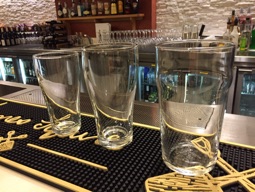
There are many places for socializing at the campus, our Friday spot was mostly "Fellows". Choosing a brand is one problem, you need to learn the sizes, too: middy, schooner, pint.
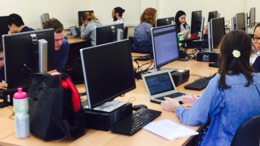
To learn different styles of teaching I was also attending classes. R programming above, Natural Language Processing classroom below. My university colleagues will guess the difference in budgets between both places :)
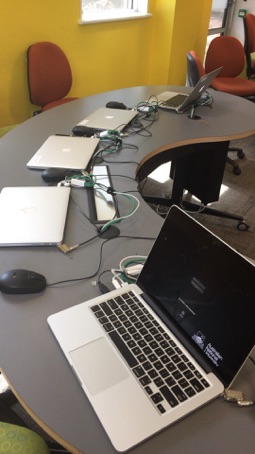
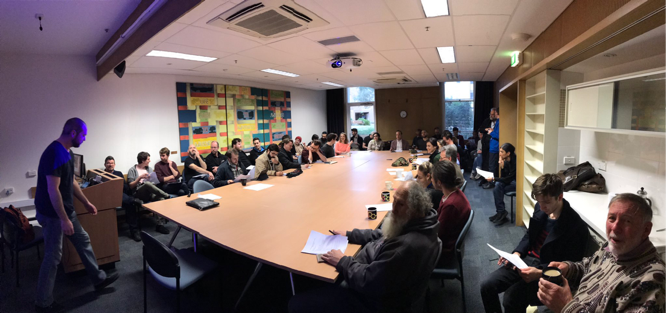
ANU philosophy is world famous. I was astonished that some of the members understand shallowness of deep learning better than many computer scientists.

One of the mini-hackathons at COEDL. Wonderful idea I want to copy at my lab.

I liked this small library at the Philosophy & Ethics department. Reminded me of my room!
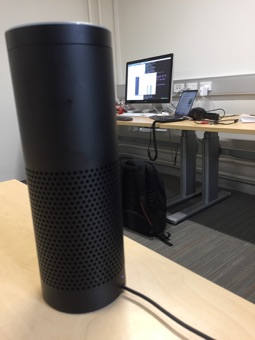
I got involved in Alexa (Amazon Echo) hacking. I have some "Alexa Skills" ready to be ported when it comes to Japan :)
Workshop onsemantic primes.Prof. Goddard giving a talk.

To keep our Japanese alive we participated in events organized by Japanese community. Of course Polish group was also strong but less active and organized.
As my main topic was an agent for supporting second language acquisition, I attended all meetings about tools for teaching languages.

Scale of some home parties was surprising even for Polish standards! By the way, I didn't know that Eurovision is that popular in Australia...

I had some visitors during my stay, also from Hokudai. I'm trying to help Professor Obayashi from the Center for Innovation and Business Promotion to make our uni safer and more user-friendly place.
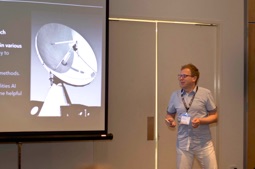
Giving a talk to forecasters' community at ISF 2017.
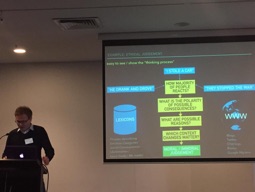
Presenting my latest results during the AGI 2017 conference.
I'd like to recommend this conference to anyone who thinks about bigger picture of AI (as AI fathers imagined it) since currently the field seems to be limited to some successful but narrow techniques.
Currently my ethical judgement system agrees with human subjects in almost 86%. Slow but visible progress.
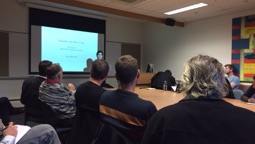
Philosophers discussing the Epistemic Modals (Weekly Thursday Seminar).
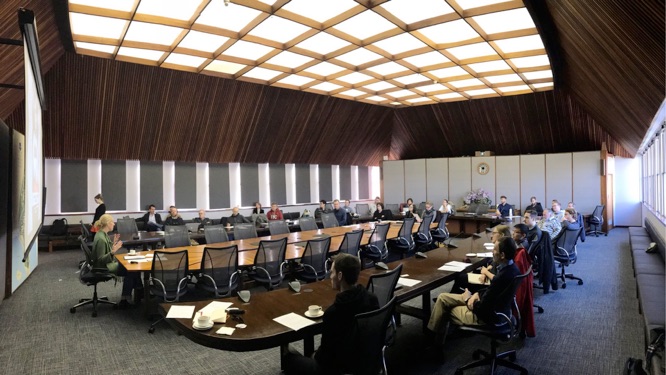
When all seminar rooms are taken, you can use even the Chancellors' room. How cool is that!
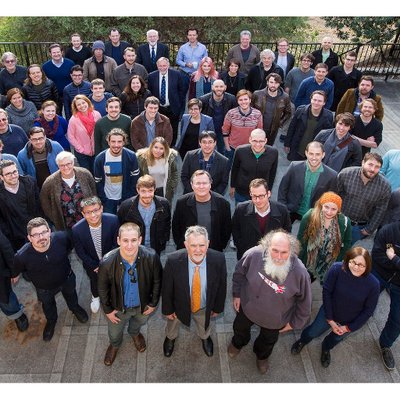
With ANU philosophers, find Wally.
As you might have heard, my university is in a financial slump which brings us down in rankings. The promotions are frozen and many (almost everyone?) asked me why I came back. I know that in Japanese universities meritocracy is usually a foreign word. But you need to understand my love to this place. "Hokudai" has raised me and I want to pay back what it gave me. Escaping a sinking ship is easier than patching the holes. But until there is hope, I'll keep my research in the constant pace. I hope my colleagues will not lose their faith and with achievements we will keep our university floating until somebody learns how to run it without literally encouraging people to give up and go away.
Australia is a beautiful place and ANU is an excellent place to work. I hope our cooperation will continue and my new colleagues will help me with improving my research.
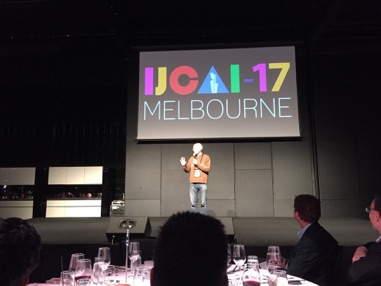
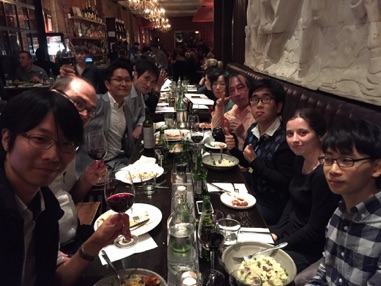
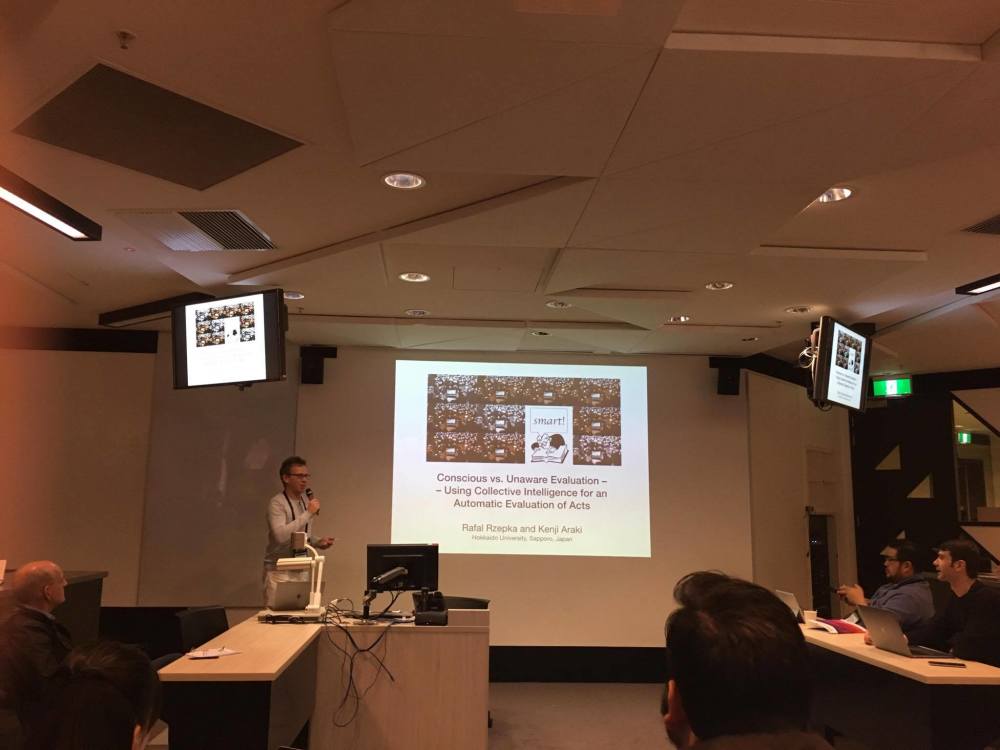
I have also managed to present my work at two international conferences and two international workshops during my stay. Above: Prof. Walsh at the IJCAI 2017, below my students and co-researchers preparing to their presentations and later networking with Japanese participants.
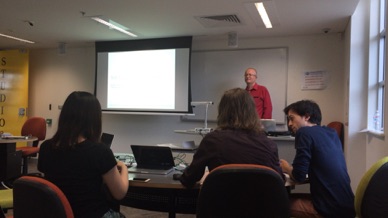
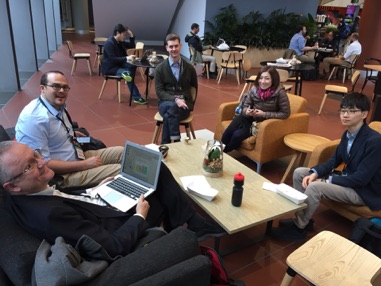
My special gratitudes go to Dr. T. Mark Ellison (above) and Dr. Siva Kalyan (below).
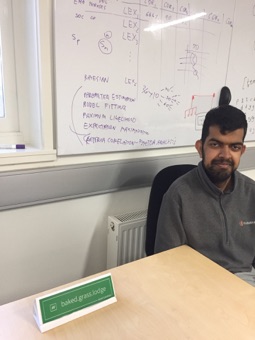
Together with their families they made our stay so much nicer on daily basis. And their fascination, interest and deep knowledge of so many interesting research questions has shown me how much there is to be learned. Thank you and hopefully see you soon!
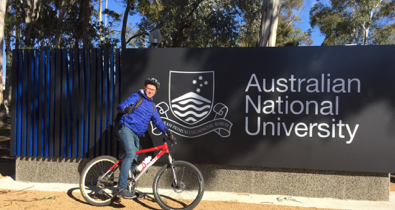
My work at the ANU wouldn't be possible without the financial support from the Graduate School of Information Science and technology, I hope the support will be continued in the future and that you will make it compulsory to allow more of my colleagues go for a similar reboot / power-up.
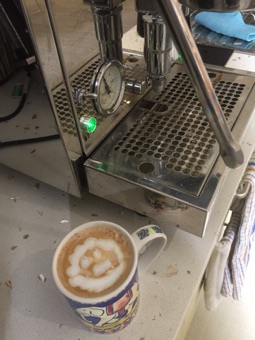
Last but not least, thanks to you, COEDL coffee machine. You helped me to survive all these brainstormings and allowed to stay focused while I was exploring unknown territories outside my comfort zone :)
Disclaimer: not all pictures shown on this page were taken by me. I would like to thank their authors for their help with supporting my memory. Especially the ANU Philosophy team which does a wonderful job with photo-documenting their meetings.
← Back to Blog List